Sunday, March 20, 2016

Week Twenty Six in Review (Mar. 14 - Mar. 18)

Greetings from the music room! What an exciting week of singing, moving, and playing instruments! In addition to the usual music classes, all K-4 students were invited to watch Loon Lake's fifth graders perform Annie Kids on Thursday, March 17th. Below are a few snapshots from the Loon Lake daytime performances of Annie Kids.
The Finale: The Sun Will Come Out Tomorrow
Miss Hannigan caught Annie trying to run away from the orphanage.
It's the Hard-Knock Life for Us!
Miss Hannigan, Rooster Hannigan, and Lily St. Regis discuss their bad luck.
One more snapshot from the finale.


Here are some of the week's other highlights:

Kindergarten enjoyed playing xylophones during the chant The Ship. As this chant talks about the waves going up and down on the ocean, the students were led to discover that they can make up and down sounds on the glockenspiel. Students discovered that the big bars make low sounds while the little bars make high sounds. Students also continued to practice keeping a steady beat during the song Wishy Washy Wee. Students alternated patting their knees and clapping their hands as two students linked arms and swung in the middle of the circle. Students also learned a 'wishy washy' step to make sure that they all have sea legs! Lastly, more students were given the opportunity to sing a solo in order to uncover the mystery during the song Who Took a Piece of My Pumpkin Pie.

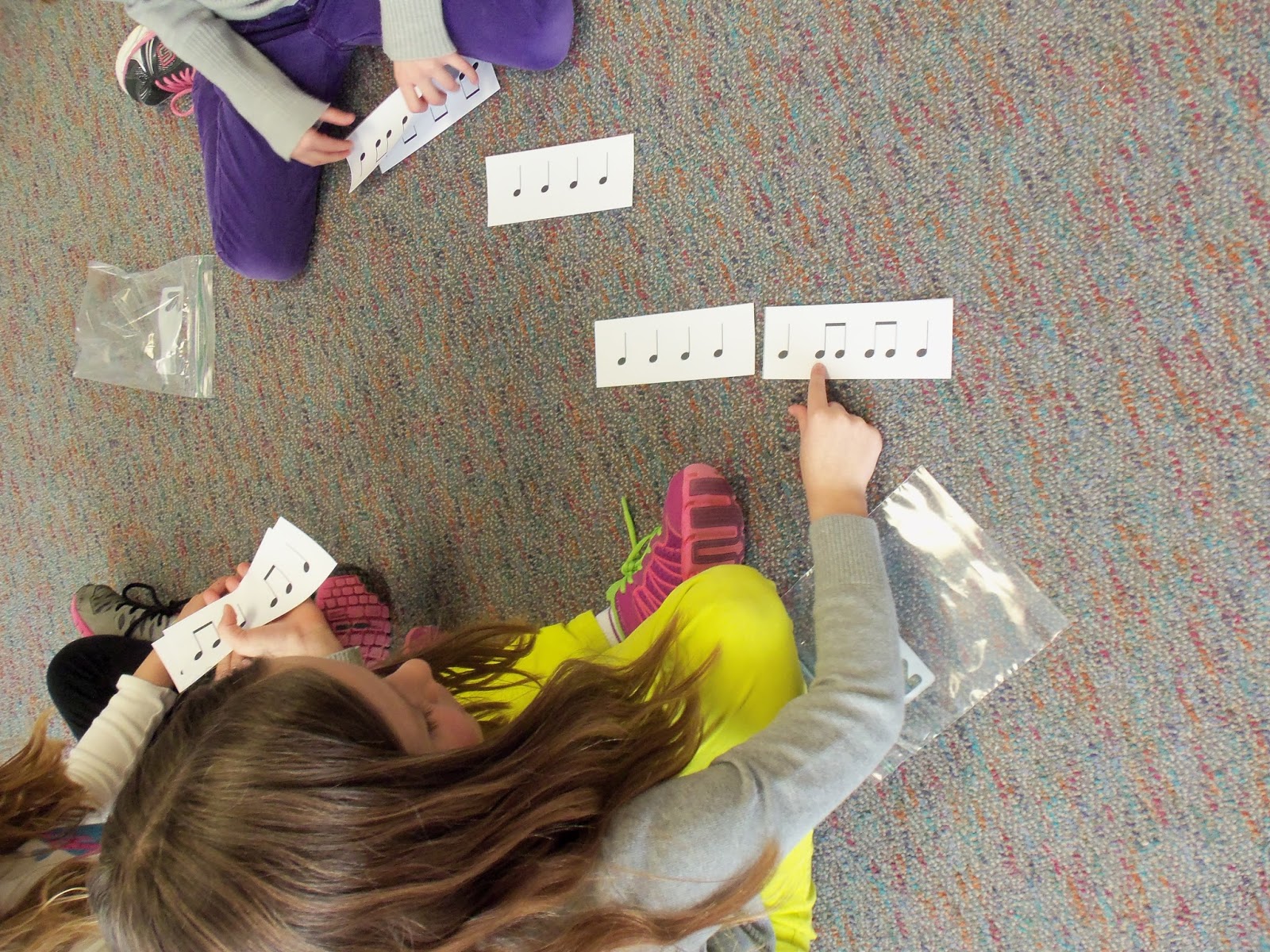
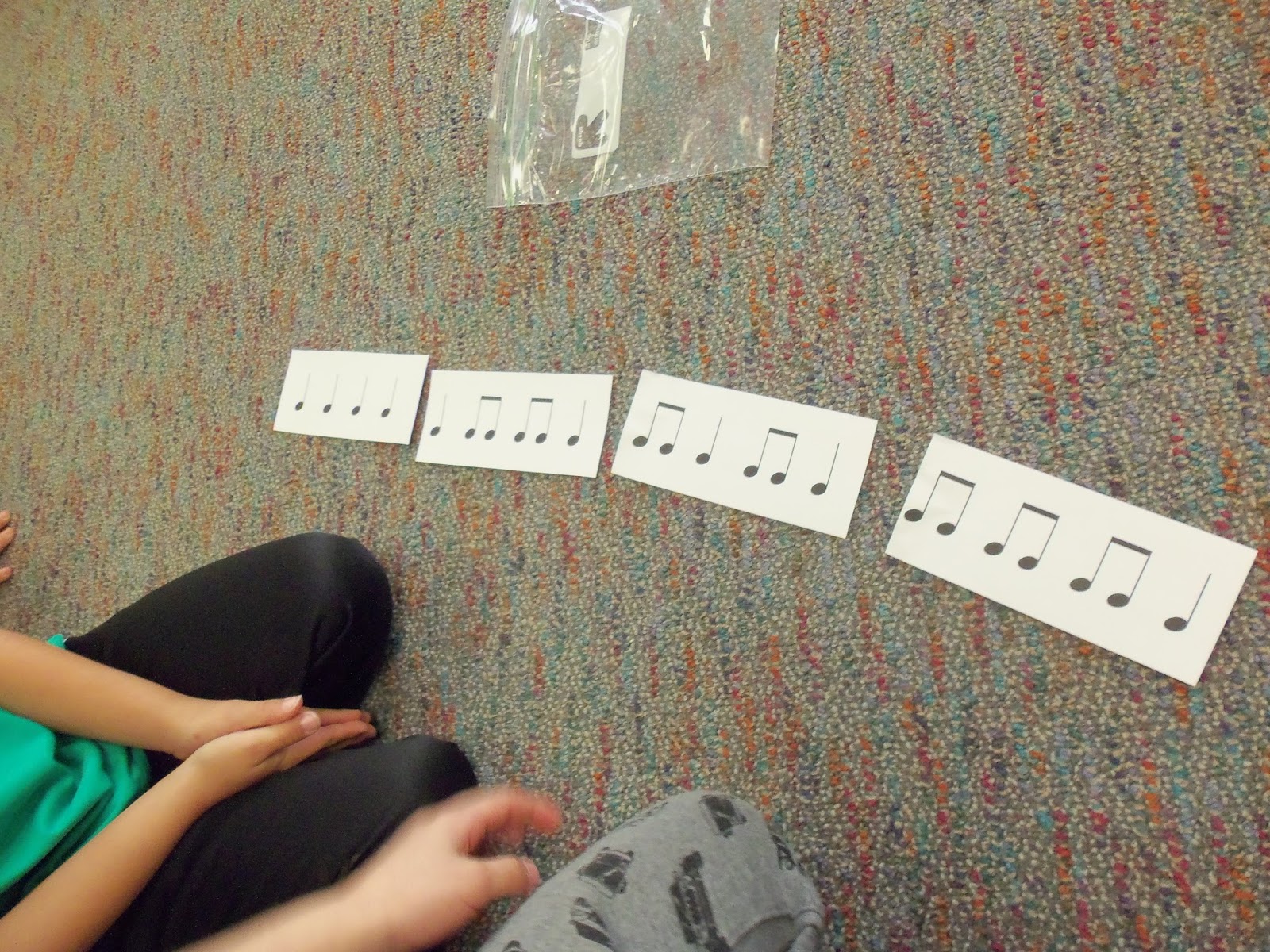
First grade students were formally introduced to melodic note la this week! After discovering the placement of la on the music staff, students echoed a variety of sol mi and la patterns. Students also played a game called poison pattern in which they had to listen closely to all patterns in order to not accidentally sing the 'poison' one. Additionally, students learned a new la song, A Tisket A Tasket. This song will be used to help students practice their new note. Students also practiced many quarter note, quarter rest, and eighth note rhythms this week. Students were given five rhythms and had to determine which one was clapped or played on the recorder by the teacher. 

Second grade focused heavily on melodic notes la and do as well as the rhythm half note this week. Students used dry erase markers and white boards to write a variety of sol mi and la patterns. While I was expecting the students to be successful with this activity, I was not prepared for the ease with which they wrote the patterns! Students also discovered the location of a new low note (do) in the song No One in the House but Dinah and learned another song which contains this new low note, Donald Duck. Students learned to sing Are You Sleeping  in french (Frere Jacques). After learning this song, students were asked to clap the rhythm and indicate the location of any half notes by dragging their fingers down their forearm. Students also began learning another song which contains half notes entitled Who's That Tapping at the Window.
 
This student is off to a good start! He has correctly written the melodic pattern.
This student has correctly written and labeled the pattern!


This student is adding note stems to the sol mi la pattern.
This student has correctly located a new low note!

Third grade students enjoyed playing a rhythm game to a song called Black Snake. This do re mi sol la song allowed students to practice reading quarter notes, quarter rests, half notes, half rests, and eighth notes. As students sang the song, a black snake made of yarn was passed around the circle. The student with the black snake at the end of the song could choose from six different rhythms in order to earn points for their team. Students also explored the upper range of their voices by participating in the wave. Students raised and lowered their arms as if at a sporting event and added an upward glissando to this motion. Lastly, students played a mi re do low la pattern on the xylophones while singing the song Captain, Don't Side Track Your Train.

Fourth grade students enjoyed a recorder day on Tuesday. Students learned the first section (the A section) for the song Hop, Skip, Jump. This song allowed students to review the notes B, A, and G while playing along with upbeat rock-and-roll style music. Students were also given the opportunity to achieve a new recorder karate belt level on this day. On Wednesday, students reviewed the characteristics of the percussion family and were given live demonstrations of a wide variety of percussion instruments including a miniature steel drum and a spring drum. Lastly, students watched a brief video showing how the hammers inside a piano hit  the instrument's strings making it a percussion instrument.

Fifth grade students rehearsed in the gym on Monday and Tuesday in preparation for Annie Kids. On Thursday, the students performed twice during the school day. They performed for K-2 in the morning and for 3-4 in the afternoon. Fifth grade students also participated in one evening dress rehearsal and two evening performances. One performance was on Thursday, March 17th and the other was on Friday, March 18th. I could not be more proud of the hard work and dedication that the fifth graders put into this production! Congratulations to all fifth grade students on a job very well done!

Tuesday, March 15, 2016

3rd, 4th, & 5th Grade Detroit Symphony Orchestra Field Trip


 Dear Parents and Guardians:

I am very excited to announce that third, fourth, and fifth graders will have the opportunity to participate in a field trip to Detroit in order to see the Detroit Symphony Orchestra on Wednesday, April 27th! Students will depart from Loon Lake Elementary at 10:15 a.m. and return at approximately 1:45 p.m. The performance that they will attend is an educational concert program based on the four seasons. The cost per student for this field trip is $10, a cost that has been reduced through a generous donation by the P.T.A.

As this field trip falls over the lunch hour, students will be eating a sack lunch when they return to school. Please plan to have your child bring a bagged lunch to school on this day.

Additionally, we are searching for chaperones for this field trip. There will be an average of five chaperones per classroom. If we receive more than five chaperones for each classroom, then names will be drawn from a hat to determine who will attend. Please let Mrs. Aaronson know by Friday, March 18th if you are interested in chaperoning this field trip.

Please fill out the permission slip, place it in an envelope, and send it back to the school along with cash or a check made payable to Loon Lake Elementary by Friday, March 18th. All items should be turned in to Mrs. Aaronson in the music room. Thank you!


Sincerely,

Mrs. Aaronson

Sunday, March 13, 2016

Week Twenty Five in Review (Mar. 7 - Mar. 11)

Greetings from the music room! It was a another exciting week of singing, moving, and playing instruments! Here are some of the highlights:

Kindergarten students began learning a song for solo singing entitled Who Took a Piece of My Pumpkin Pie. Students enjoyed the mysterious nature of this simple song and the game that accompanies it. In order to play the game, one child goes into the center of the circle and hides his eyes. Then a child in the circle is chosen as the 'thief.' At the end of the song, the chosen child sings "I took a piece of your pumpkin pie." The child in the center must then guess who the mystery singer is based on the sound of the singer's voice. Students were incredibly successful at identifying the mystery singer! Students also began learning two new songs to practice steady beat: Wishy Washy and My Little Boat. Students began learning a chant entitled The Ship. This chant will be used to expand students' knowledge of classroom instruments as well as work on the difference between pitches that go up and pitches that go down.

First grade students enjoyed learning a new song entitled Walk and Stop this week. This playful song, which encouraged students to stop and freeze at predetermined locations within the song, allowed students to practice moving to the steady beat and differentiating between high and low sounds. If the song ended with a high note, students were to create a tall statue. If the song ended with a low note, then students were to create a short, low to the ground statue. Students explored the range of their voices by following the ups and downs of a ribbon stick. After a few demonstrations by Mrs. Aaronson, students were then asked to lead this activity. Some students created patterns that were challenging for the class to 'sing' accurately! Students also searched for the new high note (la) in the song Snail, Snail. After students could successfully locate this note, they filled in the rest of the notes with the melodic notes sol and mi. Given the students' great success with this activity, they will be formally introduced to la next week!

Second grade students used the song Traffic Lights to practice melodic notes sol mi and la. First, students sang the song using solfege and hand signs. Then students were asked to write short melodies on the five line staff by using the interactive white board. Students did a great job helping each other remember all of the rules for writing the notes sol mi and la on the staff. Students also looked for the appearance of the new low note (do) in the song Charlie Over the Ocean.

Third grade students focused heavily on the melodic note low la this week. First, students echoed short melodies that included melodic notes low la do re and mi. Then students decoded the solfege to the song Big Fat Biscuit and played the song's game while singing the song using solfege. Students also began learning a new song entitled Captain, Don't Side Track Your Train. This song is being used to reinforce melodic note low la. Students were asked to find the sentences of the song that matched the pattern mi-mi-re-do-low la and were very successful! Students also finished learning the Heel and Toe Polka! In addition to learning the remainder of this dance and experiencing the form of folk music through movement, students were led in a discussion about how to be respectful to all classmates while dancing.

Fourth grade students focused heavily on brass instruments this week. Students reviewed the characteristics of brass instruments, particularly those that differentiate them from woodwind instruments. Students also worked with partners to make lists of woodwind and brass instruments and to practice differentiating between the sound of woodwind and brass instruments. The instrument that caused students the most difficulty was the bassoon. Due to its low sound, many students mistakenly identified it as a brass instrument. Students also began learning about percussion instruments and the characteristics of this instrument family. Lastly, students voted to have a recorder day next Tuesday.

Fifth grade students, after listening to 15 minutes of Beethoven's Ninth Symphony over the course of several classes, discussed facts about this famous composer. Topics covered included the composer's importance to the beginning of the Romantic music period, his deafness, and his musical talent not only as a composer but also as an organist and pianist. Additionally, students focused on completing their memorization of the music for Annie Kids. Students also learned their spots on the risers and practiced entering and exiting them at the correct time.

Sunday, March 6, 2016

Week Twenty Four in Review (Feb. 29 - Mar. 4)

Greetings from the music room! It was a another exciting week of singing, moving, and playing instruments! Here are some of the highlights:

Kindergarten students enjoyed adding boomwhackers, a musical instrument that consists of pitched, colorful tubes, to the song Snowman Joe. Snowman Joe is a song built on the notes of the major scale, the notes rise one pitch at a time as the song progresses. When Mrs. Aaronson played the boomwhackers for the students, in the order of the major scale, she was greatly pleased when some students noted that the boomwhackers sounded just like Snowman Joe! Students were then given the opportunity to play one of the notes themselves. Students also revisited the song Johnny Work with One Hammer in order to review fast and slow and to practice steady beat. Revisiting this song from the beginning of the school year easily showed how much the students have progressed in their ability to keep a steady beat since the beginning of the school year! Lastly, students began learning a song called Little Snow Flakes which, in addition to having a fun "ice statue" game, allowed students to begin differentiating between notes that go up and notes that go down.

First grade students learned a new song entitled The Kangaroo. This song allowed students to improvise a short response and to practice singing melodic notes sol and mi. Next week, students will review this song and play its repeating notes on the xylophone. Students also participated in a vocal exploration exercise called 'back shapes.' In this exercise, students worked with partners and used their fingers to draw shapes on each others backs. The person whose back was being drawn on was to make a sound with his or her voice that matched the shape of the drawing. For example, if a student felt their partner draw a line going up his back, the student would perform an upward slide with his voice. Students also reviewed the new high note (la) by singing the song Bluebells on solfege and playing triangles only on the new note.

Second grade students only had one day of class this week as a result of the snow day on Wednesday. On Friday, students began learning a new sol-mi-la song entitled Traffic Lights. In addition to practicing the new note la, this song enables students to practice fast and slow movements and contains a fun quick reaction exercise. It also teaches children about the meaning of the colors of the traffic lights. Students also used a beat chart and dry erase markers to figure out rhythm to the song Starlight, Starbright. Once students had correctly written the song's rhythm, they were challenged to decode the solfege (sol-mi-la) for the song. 

These students are working on decoding the rhythm and the solfege for the song Starlight, Starbright.
This student has very successfully decoded both the rhythm and the solfege for Starlight, Starbright!
Third grade students learned a new song entitled Old Brass Wagon and the movement that accompanies it. This song will be used to introduce new melodic note low sol. Students also began learning the Heel and Toe Polka! This fun social dance encourages students to move to the music's phrases and to work cooperatively with one another. Social dances such as this allow students to experience a piece of music's form through movement. Lastly, students worked with partners to write in the solfege (do-re-mi-sol-la) for the song Firefly on six melodic flashcards. Once students had written in the solfege, they were asked to place the cards in the correct order. 
Two third grade students correctly wrote in the solfege for the song Firefly and then placed their melody cards in the correct order.
After students had completed the work with their partners, we checked our answers on the interactive white board.

 Fourth grade students reviewed which instruments belong to the woodwind family and the characteristics that make them woodwind instruments. Students were given a brief overview of how oboe and bassoon players can make their own reeds. Students were also introduced to the bassoon, the clarinet, and the flute through video recordings. Students were shown how size makes a significant difference in the sound of an instrument. For example, the piccolo is practically identical to the flute except that it is smaller in size and therefore plays higher pitches. Students enjoyed seeing the size variations throughout the recorder, saxophone, flute, and clarinet family. Students were also introduced to two brass instruments, the trumpet and the trombone, and learned about the defining characteristic of brass instruments.

Fifth grade students learned a new solfege pattern for warming-up and practicing correct vowel formations this week. Students also began to work on memorizing the chorus music for the musical Annie Kids. Students were led in a discussion about the style difference between the song Easy Street and the rest of the show's music. Students worked on using a light, supported voice during this song to match and maintain pitch. Students also reviewed the song Tomorrow and worked on difficult rhythms within this song.

Week Twenty Three in Review (Feb. 22 - Feb. 26)

Greetings from the music room! It was a another exciting week of singing, moving, and playing instruments! Here are some of the highlights:

Kindergarten students only had one day of class this week as a result of the snow day on Thursday. On Friday, students reviewed steady beat songs The Monkey Stomps His Feet and Punchinella. Students also began learning a song entitled My Poor Hand is Shaking. In addition to enabling students to "get the wiggles out," this song encourages body awareness and phrasing. Throughout the song students lament how one part of their body will not stop shaking. At the end of each verse, students yell "stop!," grab the shaking body part, and freeze. Students especially enjoyed the verse about their whole body shaking! Students also began learning the chant Engine, Engine which is being used to reinforce fast and slow and to practice beat. 

First grade students began learning a new song called Hop Old Squirrel. This song, which includes quarter rests, allowed students to improvise new verses and different ways to move around the room. Students were also challenged to perform various movements on select words: students hopped on the word 'hop,' clapped on the words 'old squirrel,' and patted the rhythm of all other words on their knees. Students also began learning about a new high note (la). Students were introduced to this note using the song Bluebells. Students were introduced to its placement on the music staff as well as its hand sign. Lastly, students worked with partners to place rhythm cards to the song Starlight, Starbright in the correct order. 

 
This student is sorting through her rhythm cards and is off to a great start!
These students have correctly placed the flashcards for Starlight, Starbright in the correct order.

Second grade students enjoyed experiencing Grieg's composition In the Hall of the Mountain King through movement this week. While moving to this composition, and pretending to sneak into the Mountain King's lair, students experienced how the composition gradually got faster (accelerando) and louder (crescendo). Students then read the rhythm (quarter notes, eighth notes, and half note) for the compositions' A theme and the B theme. Once secure in these rhythms, students transferred the rhythms to hand drums and rhythm sticks and played along with the recording. Students also discovered the occurrence of a new low note (do) in the song King's Land. 

Third grade students were formally introduced to melodic note low la this week! Students were led to discover that some of the notes in the song I'm Gonna Sing are lower than do. Students were then shown the note's position on the staff and its hand sign (the same as 'normal' la). Students then listened closely to the song Sally in the Kitchen  and were challenged to discover the location of low la within this song. Students also created an introduction and a coda for this and performed a rhythmic ostinato for it on xylophones.

Fourth grade students began a unit on the instruments of the orchestra this week! After taking a tone color pre-assessment, which will be used to help show student growth at the end of the unit, students were given a brief overview of the four instrument families: woodwinds, brass, strings, and percussion. Students were then introduced to the woodwind instruments oboe and saxophone through live demonstrations. Students discovered that although the saxophone is a woodwind instrument, it is very, very rarely found in the orchestra.


Fifth grade students continued to work on vowel shapes as well as the chorus music for the musical Annie Kids. Students focused heavily on learning the song Never Fully Dressed Without a Smile. Students also worked on singing strong entrances and correct pitches in the songs N.Y.C. and It's the Hard-Knock Life and maintaining a steady tempo in Easy Street. 

Monday, February 22, 2016

Week Twenty Two in Review (Feb. 8 - Feb. 12)

Greetings from the music room! It was a another exciting week of singing, moving, and playing instruments! Here are some of the highlights:

Kindergarten students pretended to build a snowman as they learned a new song entitled Snowman Joe. The melody of this song is built on the major scale and allows students to feel the rise of each pitch as they slowly build their snowman. Students also feel the melody's decent as the snowman melts to the ground at the end of the song. Additionally, students began taking turns playing the steady beat on a drum during the song Punchinella. This song and its activity are currently being used to assess student development in the skill area of steady beat. Students also learned the song The Monkey Stomps His Feet. Students enjoyed stomping around the room to the steady beat and creating many other ways for the monkey to move. Lastly, students learned a series of movements for the song Jump, Jim Joe. Students worked with a partner in order to jump, shake their heads, nod their heads, and tap their toes.

First grade students worked hard to decode the rhythm of the song Pease Porridge this week! On Monday, students were given beat charts and asked to place pom-poms on all of the silent beats (the beats with quarter rests). On Friday, students were give the beat charts once more, but this time were instructed to find all of the beats with rests and eighth notes. Students used stick notation, a type of musical short hand, to write quarter notes, quarter rests, and eighth notes. Students then checked their work as a class using the interactive white board. I was so proud of the first graders this week; they have made such progress in rhythm reading and writing just since December! Additionally, students learned the song Hot Cross Buns and discussed its origins as a street cry. Students learned playing a fun elimination game which requires students to sit down if they are pointed to on a silent beat (rest).
 
This student is pointing to each heart beat while singing Pease Porridge. The pom pom indicates that there is a rest on that beat.


Students shared their answers on the interactive white board and each student checked their work.

These students are writing the rhythm to Pease Porridge using stick notation, a type of musical short hand.
These students have completely written the rhythm.
This student is proud to show off his excellent work!
 
Second grade students reviewed new melodic note la by playing a game called poison pattern. In this game, one melodic pattern is designated as the poison pattern. Students are to echo sing all patterns except for the poison pattern. If the students are successful, then they earn one point for their class. If the students are not successful, if they sing the poison pattern, then the teacher gets one point! Mrs. Aaronson was happily defeated in this game! Students also reviewed half notes by playing xylophones along with the song Let Us Chase the Squirrel. Some students played half notes on the bass xylophones and bass bars while other students created the sound of the squirrel going up and down the tree by playing glissandos on glockenspiels. Lastly, students sang King's Land while playing its game. This song will be used next week to begin introducing melodic note do.
These students are playing the half note pulse on barred instruments to the song Let Us Chase the Squirrel.
Third grade students learned three songs for preparing low la this week: I'm Gonna Sing, Sally in the Kitchen, and Big Fat Biscuit. Students learned I'm Gonna Sing by snapping, clapping, patting, and stamping as directed by the words of the song. After learning the song Sally in the Kitchen and discussing the meaning of its words, students were challenged to pat an ostinato (a repeating pattern) of half notes and quarter notes. Then students transferred this pattern to xylophones and created an introduction and a coda for the song. Students further explored musical form, including introduction and coda, through the song Twelfth Street Rag. Students learned rhythmic patterns for the introduction and coda as well as the four other sections of this song. After students were secure in each section, they performed the whole piece along with the recording.

Fourth grade students completed their recorder unit this week. Although this is the end of the formal unit, students will have recorder days twice a month for the remainder of the school year. These recorder days will allow students to continue to develop their note reading skills and allow them to test for their next recorder karate belt. Students will be informed in advance of recorder days. To finish the recorder unit, students reviewed the notes of the treble clef staff as well as the fingerings for all known recorder notes. Students took a written assessment on the notes of the treble clef staff and the recorder fingerings. It has been a real joy to watch the students' progress in note reading over the last three months!

Fifth grade students reviewed the proper technique for shaping vowels "ah, eh, long e, long o, and oo". Students also reviewed Annie Kids songs N.Y.C. and Easy Street. In addition to working on trouble spots, students were challenged to sing these songs along with the accompaniment tracks. Students also began working on Annie Kids songs Hard-Knock Life and Never Fully Dressed without a Smile.

Sunday, February 7, 2016

Week Twenty One in Review (Feb. 1 - Feb. 5)

Greetings from the music room! It was a another exciting week of singing, moving, and playing instruments! Here are some of the highlights:

Kindergarten students learned a new song this week appropriate for Valentine's Day, A Tisket, A Tasket. Students kept a steady beat on various parts of their bodies while they listened to a recording of this song as sung by Ella Fitzgerald. Students then learned a chase game that can be played with this song and continued to keep a steady beat on their bodies. Students also practiced moving fast and slow as they sang the song Paige's Train. Students played a game in which they had to listen to the song and change their movements (fast or slow) to match the music. Students also began using their bodies to explore high, middle, and low space (preparation for introducing the difference between high and low sounds) by moving to the French composer Camille Saint-Saens' composition The Aquarium. The video linked in this paragraph was played on the interactive white board while students moved around the room, exploring the space, like fish in the ocean. After students returned to their seats, Mrs. Aaronson blew bubbles around the room to really make it feel like we were under the ocean!

First grade students are making fantastic progress in their rhythm reading skills! Students were formally introduced to quarter rests this week by reviewing last week's activity to The Muffin Man. To reinforce this new concept, students were introduced to a new song, Pease Porridge, and were asked to find the location of the silent beats in this new song. In addition to finding the rests, students also successfully discovered the location of all of the song's eighth notes. Students also continued to practice sol and mi by reviewing the song Snowflakes from last week. After mid-winter break, students will begin preparing to learn melodic note la! Additionally, students explored their voices by following a bouncing balloon. When the balloon rose into the air, students performed an ascending glissando. When the balloon fell towards the ground, students performed a descending glissando. Students also enjoyed passing the balloon around the classroom. 
This student removed a quarter note from a plate and placed a quarter rest in its place!

Second grade learned two new concepts this week! Students were formally introduced to melodic note la. After learning this new note, students were asked echo sing several melodic patterns and to color notes on the staff different colors depending on their placement on the staff. La was colored yellow or green, sol was colored blue or purple, and mi was colored red and pink. Students also learned that two quarter notes tied together (one sound over two beats) can also be written as a half note. Next week, students will practice half note by playing half notes on xylophones while singing the song Let Us Chase the Squirrel. Students also began learning the song King's Land and it's game. This song will be used to prepare students for learning melodic note do.
 
While drawing tied quarter notes, some of the students turned them into smiley faces.

Third grade students discussed the purpose of introductions and codas this week. Students reviewed the song Rocky Mountain and added a series of body percussion movements to the song. After becoming secure in these movements, students were asked to perform the song in ABA form complete with an introduction and a coda. During the A section, students sang the song while performing the movements. During the B section, students sang the song in their head while performing the movements. For the introduction and the coda students clapped a rhythmic pattern of quarter notes, eighth notes, and quarter rests. Students also practiced singing and identifying melody notes do re mi sol and la. After students sang a series of four melodic patterns written on the interactive white board, students were asked to listen to the teacher sing and then identify the correct answer. This game was played in two ways. First, the teacher sang the patterns using solfege syllables. Second, the teacher sang the patterns on a neutral syllable. Students did remarkably well with this activity. As a result, students will begin preparing to learn melodic note low la next week.

Fourth grade students focused on red belt song, Twinkle, Twinkle Little Star this week. While studying this song, students were asked to discover the repetition within this song as well as the location of new note F#. Students were reminded that songs Amazing Grace and Ode to Joy are to be learned on their own if they would like to test for the rank of black belt. Students will be able to test for belts all next week, but after mid-winter break students will only play recorder in class approximately once every two weeks. Students were also given a study guide for the note names of the treble clef staff as well as all of the recorder fingerings that we have learned during the recorder unit. Students will be assessed on their ability to identify notes on the treble clef staff and recorder fingerings on Thursday of next week.

Fifth grade students added 'shape the vowels' to their list of vocal techniques this week. Students were introduced to the five major vowels of singing "ah, eh, long e, long o, and oo." Students then practiced making the correct shape of these vowels for singing and practiced the 'long e' vowel in a modified version of the song Apples and Bananas. Students learned the folk song Great Big House in New Orleans and discovered that it could be sung as a partner song with Little 'Liza Jane. Partner songs are songs that can be sung at the same time and create pleasing harmonies. Students practiced singing each of these songs while the teacher or a group of other students sang the other song. Singing partner songs prepares students to sing independent harmonies, a skill they will need in order to successfully participate in middle school choir. Students also began learning N.Y.C. and Easy Street for the Annie Kids production in March.